Has artificial intelligence made IT degrees less attractive? That question is on the mind of many students, who are hearing stories about a changing job market and fewer career opportunities. But industry professionals do not recognize that picture. Among IT leaders from some of the region’s largest companies, there is broad consensus that businesses still need new IT talent, even as AI continues to reshape job roles and responsibilities.
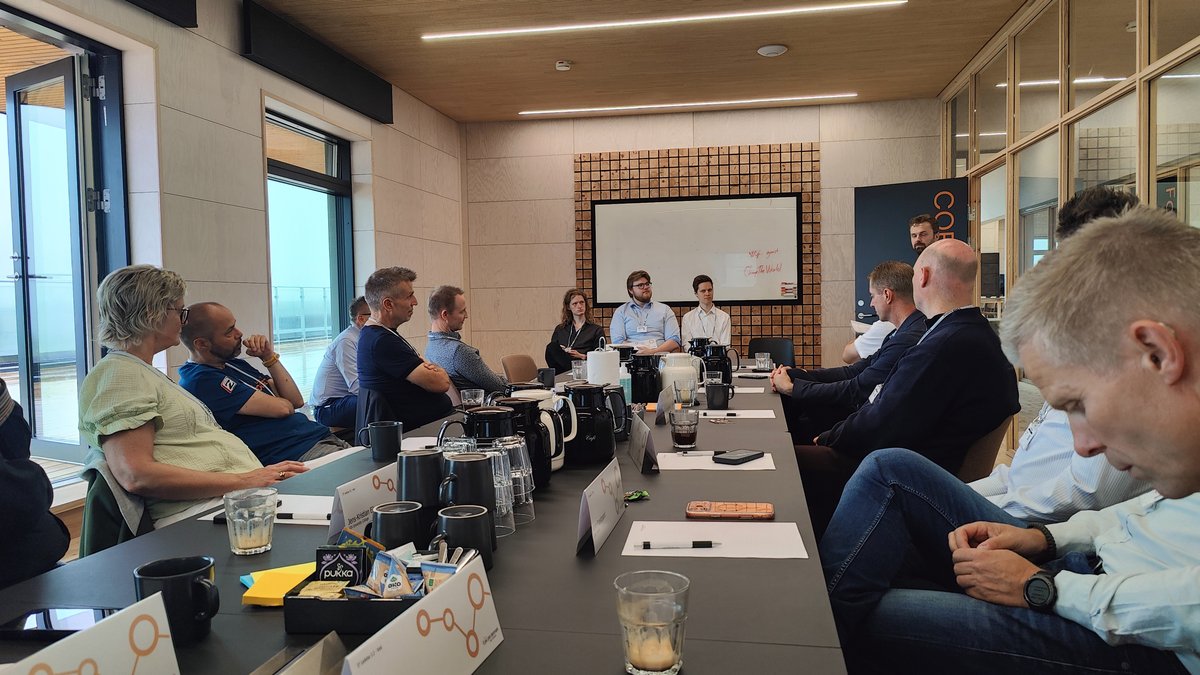
Last week, three Computer Science students from Aarhus University joined an IT Ledelse Vest, network meeting hosted by Trifork in Aarhus. Members of IT Ledelse Vest were curious about young professionals’ expectations of working life and whether their perceptions of Generation Z match reality. Many leaders experience that newly graduated employees are quicker to cancel commitments or set boundaries in order to protect their well-being, sometimes without fully considering the impact on the workplace. At the same time, this is also the generation that companies increasingly need to attract and retain.
The three students were invited to take the hot seat and provide a generational perspective on the issue. The conversation between the students and the IT leaders quickly developed into an open and nuanced discussion, where both stereotypes about Generation Z and assumptions about the future of work were challenged.
While the students could not necessarily explain the trends that many leaders observe among younger employees, they did offer their views on what it takes to attract and retain newly graduated IT professionals. Among the factors they highlighted were opportunities for professional development, meaningful work, and leaders who are able to foster trust while providing clear expectations and direction.
If companies want to attract newly graduated IT professionals, offering the latest technologies and a competitive salary is no longer enough.
For the students, an attractive workplace is largely defined by leadership, professional development, and company culture. They are looking for environments where it is safe to ask questions, expectations are clear, and opportunities exist to develop their skills as they grow into their roles.
At the same time, flexibility matters, but not as an alternative to responsibility. Trust and clear expectations make it possible to balance work, studies, and personal development. For many students, a student job is first a learning opportunity where they can gain experience and receive professional guidance.
"To me, a self-managing team is a very clear sign of good leadership," said Mikkel Franker Olsen, a fifth-semester bachelor’s student in Computer Science.
The comment sparked interest among the IT Leadership West members in attendance. Competition for young talent has intensified.
"Young people have many opportunities. The companies have to look appealing and fight for the students’ attention, now more than ever," said Rasmus Lund-Jensen from Vestas.
Despite companies’ efforts to position themselves as attractive workplaces, there is a growing sense of uncertainty among students. For many IT students, the rise of AI has raised an uncomfortable question: Will there still be a need for them after graduation?
For that reason, the three computer science students expected to discuss how AI might affect their future job opportunities and responsibilities with the business leaders. Surprisingly, however, AI was not part of the conversation. As a result, Anders Bjerrum Jensen, a first-year master’s student in Computer Science, raised the issue himself toward the end of the meeting.
"As a student, I’m reminded every day that artificial intelligence has reduced my job security. But today, none of you have asked us about AI at all. Why not?"
There was broad agreement that AI is changing how work is performed, but not the need for qualified professionals. On the contrary, the technology increases the demand for domain knowledge, critical thinking, and the ability to translate technology into business value.
Rune Thor Pedersen from Trifork emphasized that AI is a tool that can make skilled employees even more effective, but it cannot replace foundational competencies:
"You still need the degree. You still need to be able to do the job yourself, just as you did before AI existed. AI can only help improve your work if you understand what is happening behind the scenes. But we do expect students to learn how to use it in a beneficial way."
For companies, the issue is therefore not having fewer IT employees, but having employees who can work alongside the technology. That message resonated strongly with Anders Bjerrum Jensen.
"It’s a relief to hear that companies are still hiring people like me. I’m less worried after today."
Although AI dominates much of the public discussion, demand for IT skills remains strong. Companies continue to seek new talent, while also expecting graduates to combine technical expertise with curiosity, adaptability, and the ability to work effectively with AI tools.
For the companies, meeting with students was a valuable opportunity to gain firsthand insight into the generation that will soon help shape the industry.
At the same time, the students challenged several stereotypes about Generation Z. They did not see themselves as less engaged or less loyal, but rather as a generation that expects clear leadership, ongoing development, and workplaces willing to invest in their growth.
At Trifork, the experience was viewed positively.
"It’s fantastic to hear from them," said Rune Thor Pedersen, who also described the students as "excellent representatives."
Frederik Kjærgaard Christensen, a fifth-semester bachelor’s student in Computer Science, shared a similar perspective:
"Being part of the meeting has been very motivating. It’s exciting to talk with someone who could potentially be my manager in a few years, and it’s great to see how interested they are in creating a positive work environment."
The dialogue on Thursday gave companies a more nuanced understanding of the generation they will be recruiting from in the years ahead. At the same time, the students left with greater confidence in their opportunities in the job market.
